
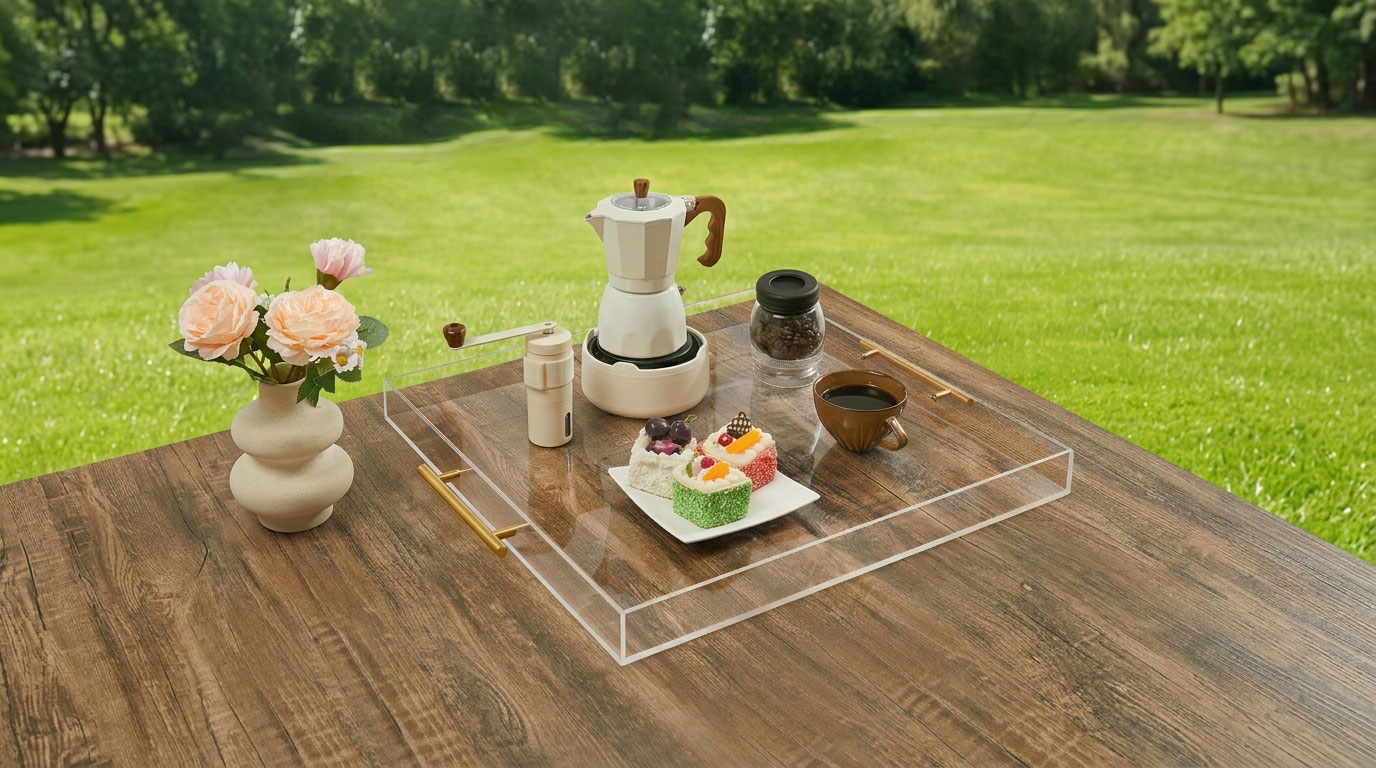
Choose a custom tray by its intended use and approved construction, not by a photograph or an unqualified durability claim. A useful buying brief connects the items it will hold, the way it will be carried, the finish your brand needs and the packaging used to deliver it.
Start with the use and footprint
List the objects to be placed on the tray, their combined weight and the available shelf or tabletop space. State whether food would touch the tray directly or remain in separate containers. Ask for documentation relevant to the intended contact and destination rather than assuming that an acrylic tray is suitable for every serving use.
Turn the design into measurable details
| Detail | Decision to record |
|---|---|
| Overall and usable size | External dimensions, interior space, rim height and measurement points. |
| Construction | Material identification, thickness, joints, handle openings and edge treatment. |
| Artwork | Logo position, decoration process, colour reference and approval file. |
| Handling | Representative contents, carrying method and the sample checks to perform. |
| Packing | Surface protection, dividers, presentation box and outer carton. |
Review the sample as a complete product
Place the intended contents on the tray and assess usable space, grip and balance. Inspect corners, joints and decorated surfaces. Document the conditions of any load or handling check and agree acceptance criteria before the check starts. A successful informal trial should not be turned into an unsupported load rating.
Agree care and product communication
Prepare instructions for cleaning, storage and exposure to hot objects. Avoid publishing “shatterproof” or “heat resistant” unless the exact construction, test conditions and limits support the claim.
ACRYLITE’s care guidance is a manufacturer reference for its acrylic sheet. Request the care instructions for the material actually supplied; the reference does not establish this website’s material grade or finished-product performance.
Compare equivalent quotations
Compare the same dimensions, construction, decoration and packing scope. Separate sample fees, tooling or setup charges, production cost and freight. Record quantity breaks and quotation validity, and identify which changes would require a revised sample or price.
Prepare the next discussion
Send the product drawings, artwork revision, estimated quantity and destination through our project contact page. Keep the accepted sample, specification and packing instructions together so that the quotation and later inspection refer to the same version.