
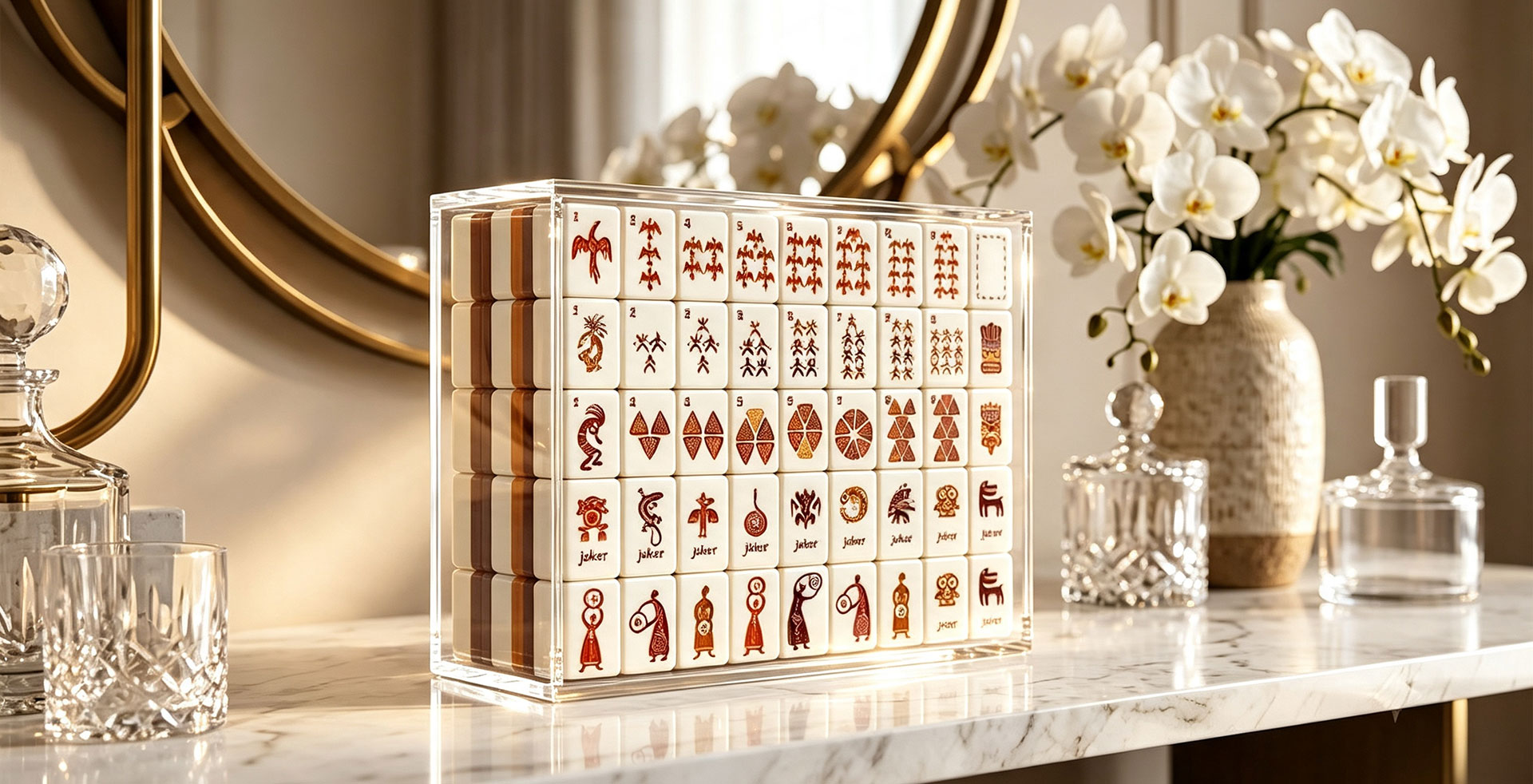
A resale-ready mahjong brief connects the playing format to the physical set and the information your customer receives. Use these eight checks to approve a defined sample, not a general promise of quality.
1. Playing format and tile contents
Identify the rules your customers intend to use. Approve a face-by-face list including Jokers, flowers and any spare tiles. Keep the tile count and any included rule materials explicit in the packing list.
2. Dimensions and tolerances
Record tile length, width, thickness and measurement points. Agree tolerances with the proposed process and inspect sample measurements against that agreement. This guide does not establish a universal size tolerance for custom mahjong tiles.
3. Artwork and readability
Check every face against a versioned artwork file. Review orientation, symbol distinctions, contrast and readability under agreed lighting. Record any differences between the digital proof and the physical result.
4. Material and surface finish
Ask for the material identification and relevant documentation. Review colour, opacity, layer construction, edge feel and decorated surfaces. Agree care instructions and evidence for any performance statement you intend to publish.
5. Accessories and compatibility
Check tiles in the selected racks and case inserts. Record rack capacity, pusher operation, accessory quantities and the arrangement of the packed set. Do not assume accessories shown in a photograph are included in the quote.
6. Packaging and customer information
Confirm individual protection, labels, instructions and carton counts. Assess how the set will be stored and transported. Agree a suitable packaging test where the sales channel or distribution route requires one.
ISTA’s test-procedure directory distinguishes packaging tests by distribution context. Select a relevant procedure with the test provider for the actual product and package, rather than treating a drop-test claim as universal protection.
7. Inspection and issue handling
Define defects and acceptance criteria for appearance, contents, dimensions and function. Agree inspection records, the reporting window and how disputed results or replacements will be handled. Keep these terms with the order.
8. Approval and change control
Identify the accepted sample and artwork revision. Confirm the production quantity, packing list and schedule before release. Recheck affected details whenever a material, process, component or packaging change is proposed.
Prepare the next discussion
Send the product drawings, artwork revision, estimated quantity and destination through our project contact page. Keep the accepted sample, specification and packing instructions together so that the quotation and later inspection refer to the same version.