
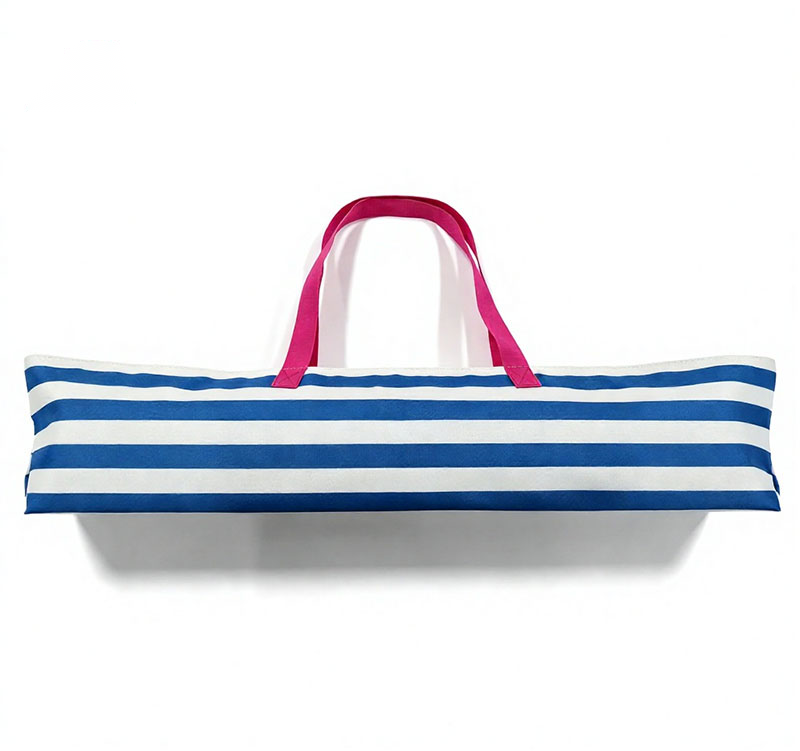
“Bag for a complete mahjong set” can describe several different products. One buyer expects loose tiles in a tray, another wants tiles and racks in separate pouches, and a gift buyer may expect the entire retail box to slide inside. Those configurations need different briefs.
Before requesting a custom bag quotation, list what goes inside, how each item is packed and what travels separately. Include the dimensions of the packed components, not just the tile size. Use that contents brief to review the proposed layout and a sample packed with the actual items.
Choose the carrying configuration first
Start with how the customer will move the collection from storage to the table. A bag that carries one accessory has a different purpose from a bag intended to hold every component together.
| Intended configuration | What the brief must identify | Main question to resolve |
|---|---|---|
| Tiles in their own tray or case | The complete tile inventory and the outer dimensions of its container | Is that container included in the bag order or supplied by the buyer? |
| Tiles plus racks and small accessories | Every packed component, its quantity and proposed location | Which items need separate compartments or pouches? |
| Tiles, accessories and a mat | All the above, plus the mat in its agreed packed form | Does the mat travel inside this bag or in a separate carrier? |
| Complete retail box inside a bag | The finished box dimensions, including any external sleeve or other packing | Is the bag intended to remain in use after the retail box is removed? |
These are planning choices, not statements that one bag style can accommodate every arrangement. Confirm the construction for the selected contents. A photograph of a bag does not establish its usable capacity.
Describe each item in the form it will actually travel
A tile measurement alone does not describe a filled tray. A rack placed inside a protective sleeve takes up a different space from the bare rack. Similarly, the flat dimensions of a mat do not describe a rolled mat in its carrier.
Create a contents list with a separate row for each packed component. Record:
- Item and quantity: the agreed tiles, racks, pushers, mat and small accessories included in this configuration.
- Packing state: loose, in a tray, in a pouch, in a retail box or another explicitly agreed arrangement.
- Packed dimensions: length, width and height, with units and a photograph showing how they were measured.
- Reference version: the sample, drawing or container revision used for the measurements.
- Proposed position: the main compartment, a named pocket or a separate carrier.
- Confirmation needed: any component that is still being developed or has not yet been measured.
For a mat, settle its packing method before using it to size the bag. The rolled or folded mat packaging guide explains the decisions to review. Do not assume a mat can be folded simply because a smaller bag would be convenient.
If the bag must hold a retail box, measure the finished box rather than estimating from the tiles. Confirm whether a sleeve, ribbon or protective outer wrapping remains on the box when it is inserted.
Identify what is excluded
An exclusion can prevent as much confusion as an inclusion. If the mat travels separately, say so in the contents brief, sample request and eventual retail description. If customers supply their own card holder or other accessory, clarify whether the bag is being designed to accommodate it.
For example, an illustrative brief could read:
The main bag holds the tile tray, the specified rack-and-pusher pouch and the small-accessory pouch shown in layout C2. The mat travels in a separate carrier. The retail presentation box is not intended to fit inside the main bag. Review the bag with these packed components before approving the layout.
This example defines the carrying arrangement without inventing a universal bag size or promising a load capacity. In an actual brief, the referenced layout should identify the exact component versions, quantities and dimensions.
Decide which items need to stay apart
Ask where hard components can contact one another and how small items will be kept together. A separate rack pouch, a divided interior or a small-accessory pocket may be worth discussing for the selected arrangement. Do not treat a lining color or fabric label as proof that the contents will be protected in use.
Consider access as well as storage. Can the customer remove the tile tray without emptying every other compartment? Can a small pouch be located and taken out easily? Does removing the mat, if included, disturb the remaining contents?
Give each proposed compartment a purpose. For example, “pocket for the agreed dice pouch” is clearer than “extra pocket.” Confirm whether the pouch itself is included and whether the pocket is intended to retain it when the bag is moved. Review those choices in the physical sample instead of relying only on an attractive interior rendering.
Review the bag with the full agreed contents
An empty sample can help you discuss fabric, color and branding, but it cannot establish that the loaded arrangement works. Pack the sample with the exact components and containers recorded in the brief. If substitutes are used during development, document the differences and keep the relevant fit decisions open.
During the packed review, check that:
- Each listed item has an identifiable place and the contents count is correct.
- Items pass through the opening without forcing the closure or bending components.
- The bag closes in the intended arrangement without requiring an unexplained packing trick.
- The lining, dividers and closures do not visibly snag or interfere with the components during ordinary packing and unpacking.
- Handles and any straps are positioned as intended when the bag is loaded.
- The agreed access sequence works for someone who did not design the layout.
Record the actual packed weight if it is needed for carrying or shipping decisions. Do not estimate it from a generic mahjong set or describe a bag as suitable for a particular load without supporting confirmation. Discuss the intended use and any required load or durability assessment with the responsible project team; this checklist is not a laboratory test method or a performance rating.
A carrying bag and the outer shipping package also serve different purposes. Confirm the shipping arrangement separately rather than assuming that approval for everyday carrying establishes parcel-delivery protection.
Keep fit and appearance approvals traceable
Once the contents and layout are agreed, connect them to the selected exterior, lining, closure, handles and branding references. The logo placement map can help define exactly which panel carries a mark and its orientation.
Record the bag sample ID, contents-list revision and review outcome together. If a tray grows, a rack changes or the buyer adds a mat, revisit the affected layout before treating the earlier bag approval as current. Ask for any effect on the quotation and sampling plan to be confirmed in writing.
FAQ
Can the bag be sized from the tile dimensions alone?
Only when those measurements fully describe the intended contents, which they usually do not. Provide the dimensions and packing arrangement of the complete contents, including any trays, pouches or box that will remain inside.
Should the mat go inside the main bag?
That is a project decision. Define the mat's packed form and decide whether the customer carries it inside the main bag or separately before approving the bag layout.
Is an empty bag sample enough for fit approval?
No. Review fit with the agreed packed contents. An empty sample can support an appearance discussion, but it does not demonstrate access, closure or the loaded arrangement.
Does a carry bag replace the shipping box?
Do not assume so. Specify the everyday carrying arrangement and the delivery packaging separately, and review the protection needed for the actual shipping plan.
Prepare your bag inquiry
Use the MahjCustom carrying bag page as a starting point, then send the contents list, packed measurements and photographs through your customization brief. If part of the collection is still changing, identify that open item when you contact MahjCustom so the bag can be reviewed against the intended configuration.