
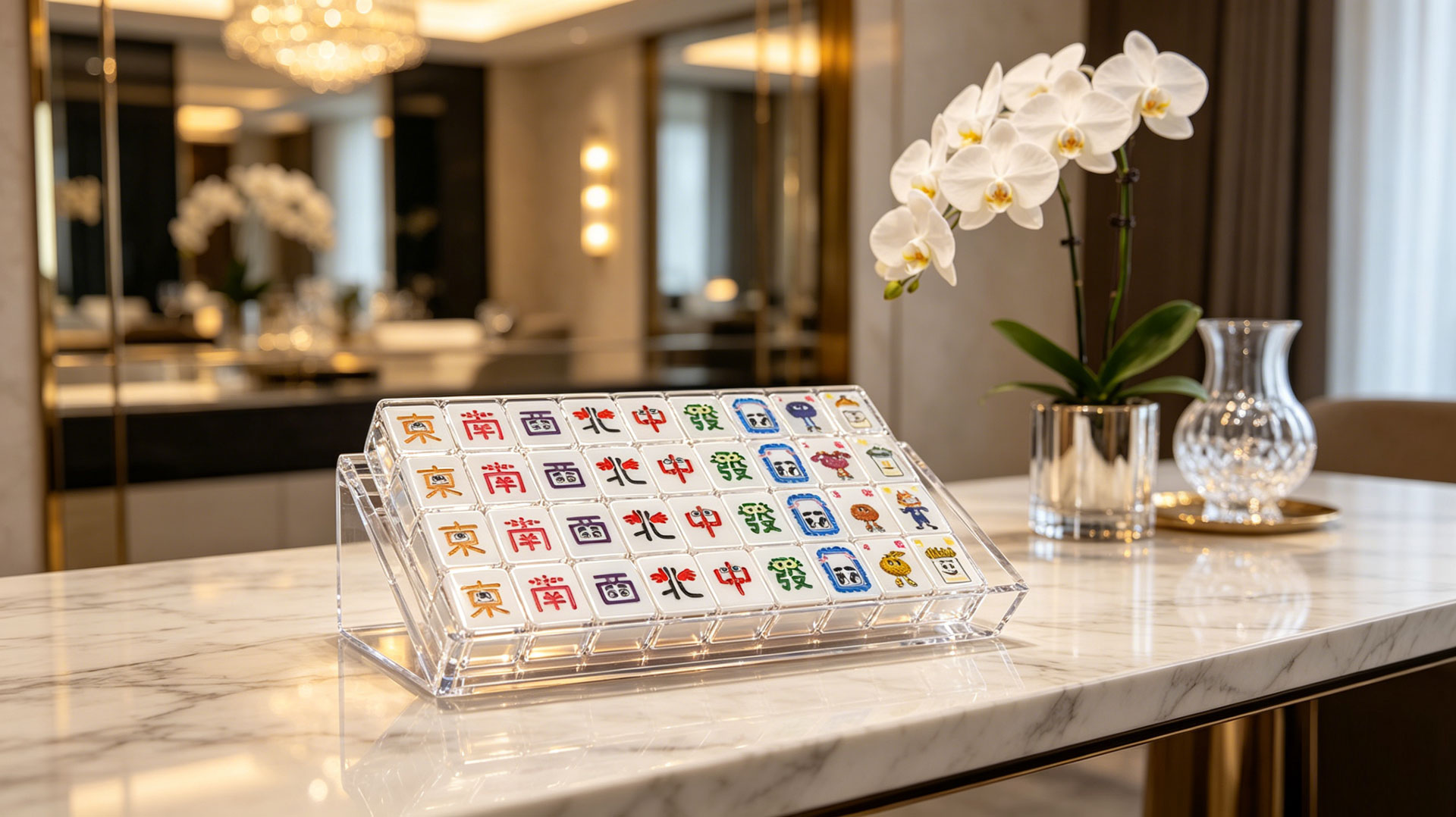
A tile design should remain readable and work with the intended playing format. Start with a face-by-face artwork list, then develop colour, reverse-side graphics and finishing choices around that list. Decorative changes should be reviewed on an actual sample.
Design for recognition
Check the distinction between suits, numbers, flowers, Jokers and any spare pieces in your selected configuration. Compare fine lines, contrast and orientation at the actual printed size. A design that looks clear on a large screen may need simplification on a tile.
Describe the visual system
Supply artwork with fonts and linked images handled appropriately, plus a colour reference and revision number. Separate face graphics from reverse graphics and specify which edges or surfaces remain undecorated. Ask the supplier to identify process limitations before approving the files.
Review the collection together
Compare the tiles beside the chosen racks, mat and packaging to check visual consistency and fit. Record which sample is approved and what needs revision. Engraving depth, print durability, available colours and commercial terms require configuration-specific confirmation rather than a universal option table.
Prepare the next decision
Next, review design file checklist alongside your current brief. Review the custom American mahjong set project page or send a project question with the relevant drawings, photographs and open decisions.
File preparation reference: Adobe Illustrator package files explains collecting linked assets for handoff. Confirm the receiving supplier’s formats and artwork requirements separately.