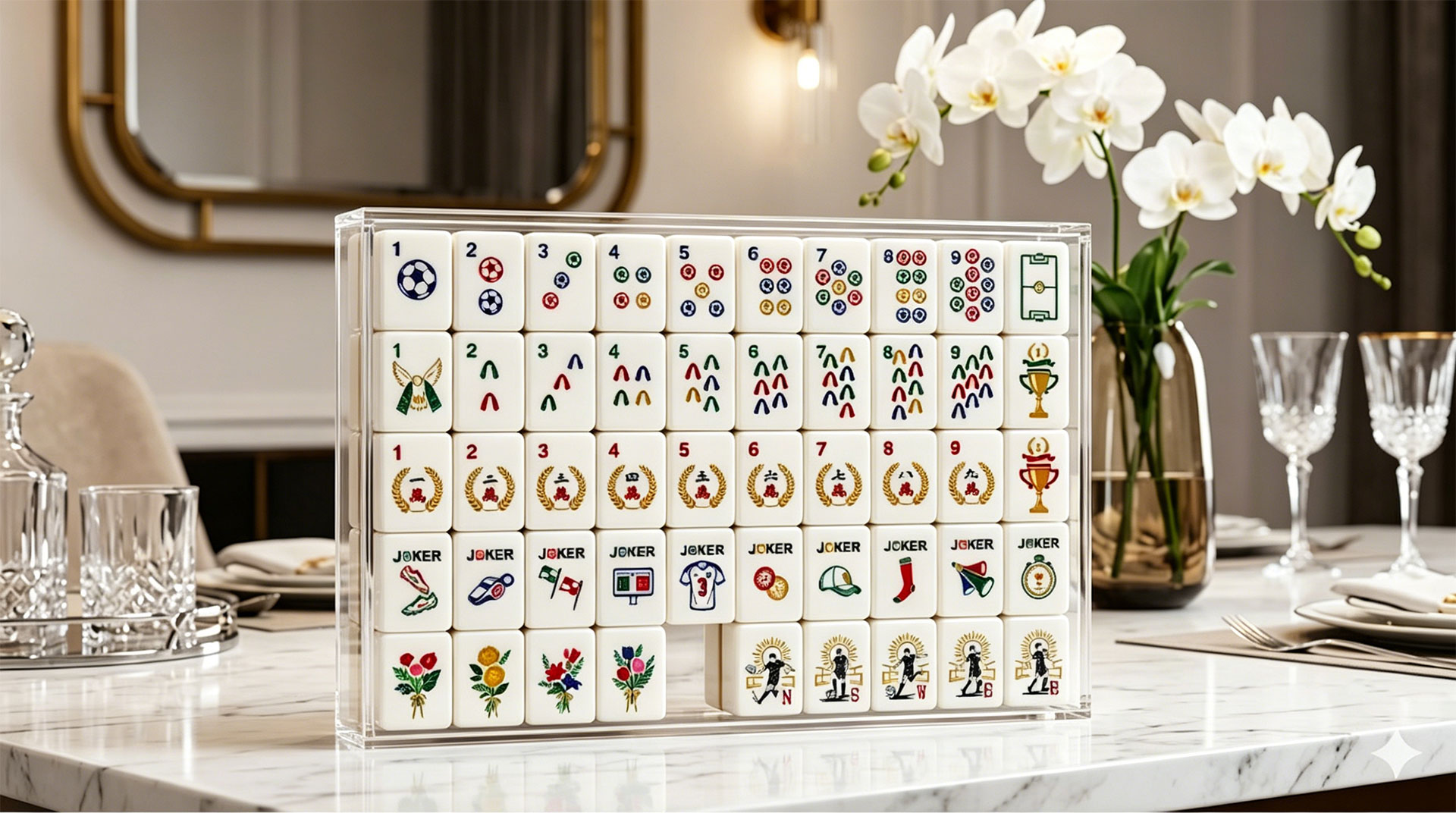
Illustrative scenario, not a documented customer case. This example describes how a hypothetical US gift business could plan a private-label mahjong set. It is not evidence of a completed project, a customer relationship, sales results or manufacturing work by Shenzhen Nuolanda Trading Co., Ltd.
Scenario and assumptions
The hypothetical buyer wants a branded gift collection for customers who already play a defined mahjong format. Its launch date, budget, order quantity, materials and destination requirements remain inputs to be confirmed. No historical project dates, customer name, batch results or sales percentages are asserted.
Prepare the project brief
The buyer identifies the intended playing rules and prepares a face-by-face quantity list. It chooses a design direction and lists desired accessories, packaging, instructions and labelling. It supplies original artwork and confirms permission to use logos, designs and other protected material.
Agree decision gates
| Gate | Buyer decision | Record |
|---|---|---|
| Proposal review | Does the quoted scope match the intended gift offer? | Material proposal, contents list and written commercial terms |
| Artwork review | Are faces, orientation, branding and box layout correct? | Versioned artwork and tile map |
| Physical sample | Are colour, handling, fit and presentation acceptable? | Sample identifier, inspection notes and agreed exceptions |
| Order approval | Are responsibilities, schedule and remedies clear? | Purchase order and accepted specification |
| Delivery review | Does the received batch meet the agreed acceptance plan? | Receiving record, counted contents and any claim evidence |
What could change the plan?
A revised logo, additional colours, a new tile size or a different carrying case could require a new sample and quotation. The buyer should confirm minimum quantities, sample fees, revision charges, production timing and transit assumptions after the scope is reviewed. This example provides no fixed MOQ, launch promise or guaranteed unit cost.
What would turn a scenario into a case study?
A publishable case needs permission and records that establish its identity or approved anonymous reference, actual project period, agreed scope, changes, and measured outcomes. Until those records are available, the planning example stays explicitly illustrative.
Prepare the artwork package, sampling checklist and packaging brief, then explore customization planning.