
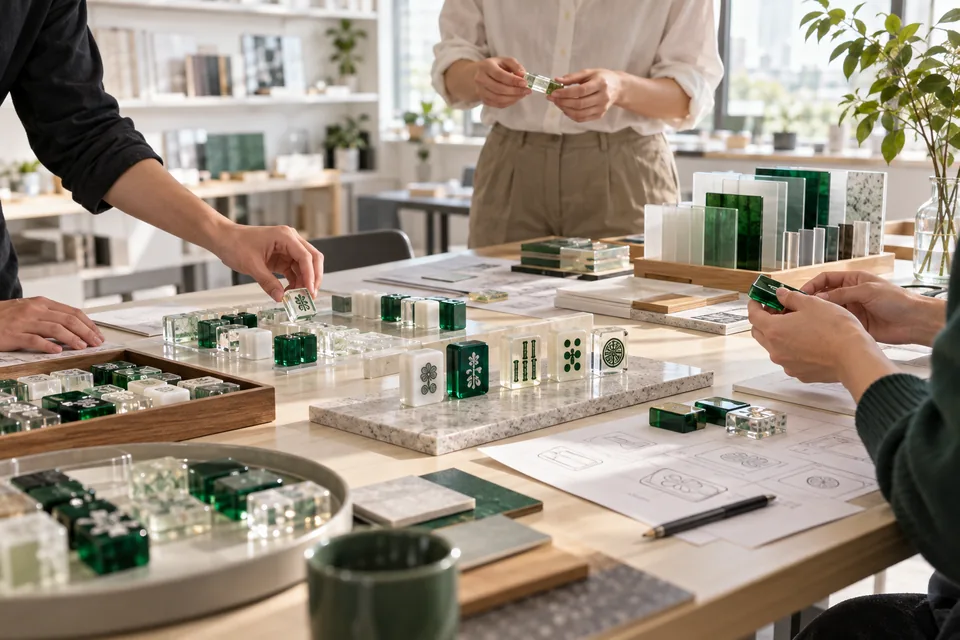
A mahjong material swatch can help you select a material's color, transparency or surface appearance. Your decision should identify the exact swatch and the features reviewed. It should not automatically approve artwork, finished tile dimensions, accessory fit or the complete set.
Before requesting samples, write down the decision you need to make. Choosing between material directions, checking a small engraved symbol and confirming a packed retail set are different tasks. Matching the sample to the question makes the resulting approval more useful.
Identify what the swatch actually represents
Ask whether the piece is a single material sheet, a layered combination or a finished tile. Record its reference code, dimensions and thickness, along with any surface treatment or decoration. If it is offered as a near-match or a substitute, keep that qualification attached to the sample record.
For a layered tile concept, identify which part of the proposed construction each swatch represents: face, middle layer or back. Separate pieces can communicate the intended palette, but they do not show the final assembled tile. Ask what sample would demonstrate the proposed layers together.
Also confirm whether the swatch represents material currently proposed for your project. An attractive reference from an earlier collection does not by itself establish current availability or suitability for your design.
Match the sample to the open question
Use the following comparison when discussing sample scope. Each option is subject to the materials, artwork and arrangements confirmed for the project.
| Sample to discuss | Useful question it can help answer | What remains outside that review |
|---|---|---|
| Material swatch | Do I want to pursue this material color or visual effect? | Finished artwork, complete tile construction and set contents |
| Existing reference tile | How does this particular tile look and feel in the hand? | Whether your proposed artwork and materials will produce the same result |
| Custom decorated test tile | How does the selected design or decoration look on the specified construction? | Other tile faces, the full quantity of pieces and packaging fit |
| Complete configured sample | How do the included tiles, accessories and packaging work together? | Unreviewed substitutions and the separate inspection arrangements for production |
A sample's name is less important than its stated contents. If a quotation says “benchmark tile,” ask which dimensions, materials, surfaces and decoration it will include. If it says “complete sample,” confirm whether racks, a mat, a bag or a retail box are actually part of the scope.
For the wider sequence of reviews, see the custom mahjong sampling guide.
Compare swatches under recorded viewing conditions
Label the pieces before comparing them. Use consistent lighting and surroundings for the review, and note those conditions in your record. Where transparency or a pearlescent effect is part of the choice, view the material from more than one angle and note the background used.
Record whether the sample thickness matches the proposed material. A reference photograph is useful for locating a piece and explaining a preference, but it does not replace an identified physical reference. Screens, photographs and the assembled product can present the appearance differently.
When coordinating a collection, bring the relevant accessory or packaging references into the discussion. Name the component being accepted rather than treating one color choice as approval for every material carrying the same color name. The colorway sample checklist provides a separate record for each version of a collection.
Write a limited, specific acceptance statement
Avoid an approval message that simply says “sample approved.” State the sample reference, the feature accepted and the next decision still open.
For example, an illustrative review note could read:
Material reference M04 is selected as the back-color direction for collection Harbor. This review covers the appearance of the supplied swatch only. The assembled layer combination, decorated faces and final tile dimensions remain to be reviewed on the agreed custom sample.
The wording keeps an early selection usable without implying that the complete product has been inspected. It also gives the supplier a clear reason to prepare the next sample.
If a feature is not accepted, record the requested change separately. “Keep the back-color direction but review a different surface finish” is more informative than asking for a generally “better” sample. Identify who will review the revised reference and how it will be distinguished from the earlier one.
Choose a useful next tile for testing
Once the material direction is sufficiently clear, discuss which unresolved design detail the next sample should address. That might be a small symbol, a detailed illustration, the back design or the assembled layer appearance. Give the chosen tile a reference linked to the artwork revision and proposed decoration method.
For an illustrative project, the buyer may like a material swatch but still need to see whether a pale number is readable on the proposed face. A decorated sample containing that number answers a different question from another plain swatch. If the rest of the set includes substantially different artwork, identify what further review is needed rather than assuming one tile covers every design.
Use the engraving and printing comparison guide when preparing questions about the proposed decoration. Agree sample suitability with the supplier; this guide does not establish a universal test-tile specification.
Keep the reference connected to later decisions
Retain the selected swatch with its label and dated review note. Ask how the supplier will identify the corresponding reference used during development. Store photographs as supporting records, and make any mismatch between the buyer's and supplier's references explicit before proceeding.
When the decorated tile or complete sample arrives, compare it with the relevant references and record any differences. A material selection does not remove the need to check the dimensions, artwork, tile list, accessories and packing arrangement covered by that later sample.
If the proposed material changes, ask which earlier decisions need to be revisited. Keep the old reference in the archive and identify the replacement clearly. Production inspection criteria and acceptable variation should be agreed for the order; a selected swatch alone does not define them.
What to include in a swatch request
Send a short request containing:
- The collection or project name and the component being developed.
- The material or visual directions you want to compare.
- Any target physical references, with an explanation of what each reference represents.
- The intended dimensions or layer arrangement, if already defined.
- The decision you want the swatches to support and what you expect to review later.
- Your destination and a request for available sample options, charges and delivery arrangements.
Ask about availability and commercial terms for the specific request. Do not assume that a material swatch is free, that its cost will be credited later, or that choosing an existing reference removes further development work.
FAQ
Does accepting a swatch approve the final tile color?
It establishes the scope written in the acceptance record. If only the supplied material piece was reviewed, the finished construction and decoration still need their own assessment. Identify the physical reference and the later comparison requirements.
Can I use an existing tile as a material reference?
Yes, if you identify which features you want it to illustrate and confirm how it relates to the proposed product. Its artwork, thickness, material or finish may differ from your intended specification, so record those differences.
Is a single custom tile enough to approve a whole set?
It can support the specific design and construction questions included in its scope. It does not demonstrate the full face list, all quantities, every artwork variation or the complete packing arrangement. Agree the additional checks needed for the proposed set.
Are swatches always available before a full sample?
Ask which references can be supplied for the materials under consideration. Availability, preparation work, charges and delivery arrangements require confirmation for the project.
Plan your next sample decision
For a custom American mahjong set, identify the material choices that remain open before requesting the next sample. Separate what you want to learn from a swatch from what needs a decorated tile or complete set.
Send your sample questions to MahjCustom with the relevant references and proposed configuration.